Sustainable Homes in Melbourne
What sustainability actually means
Sustainable builder. Green builder. Eco home. Low-carbon, energy-efficient, carbon-neutral. You see these words everywhere, and the building industry is drowning in them. They get thrown around so freely that most people have stopped knowing what any of them actually mean.
We'll put our hand up. Ten years ago, that was us. We knew we wanted to build better, but we didn't really understand what "sustainable" meant either. So we're not here to lecture. We're here to tell you what we landed on after a decade of actually doing the work.
For us it comes down to one line.
If it doesn't last, it doesn't matter
There is nothing less sustainable than building a home twice. That's twice the materials, twice the labour, twice the waste, twice the environmental hit. The greenest home is the one that's still performing in 50 years exactly as it did the day it was finished.
So when someone tells us a home is sustainable, we want to know it was built to last three to five generations, not ten years. That's the test. Everything else is detail.
What sustainability is not
Here are the lines we hear constantly that don't, on their own, make a home sustainable.
"We put solar panels on it." Solar is great. It doesn't fix a leaky, badly built house. You're just generating clean power to pump into a sieve.
"We recycle our waste." Good, so you should. But Australia's recycling system is largely broken, and recycling offcuts doesn't make the building itself any better to live in.
"It's a 7-star home." That's the minimum legal standard now. It's a code-built house, not a high-performance one.
"We used sustainable timber." Lovely. But if that's the headline, odds are the parts that actually matter (the airtightness, the insulation, the moisture management) didn't get the same attention.
A home isn't sustainable because it ticks one feel-good box. It's sustainable because the whole thing is designed and built to perform, and to keep performing, for a very long time.
So what does make a home sustainable?
Six things, and they're not negotiable. You can't pick one and skip the rest.
It draws on building science to decide how it's constructed, rather than guesswork.
It's designed around how much energy it will use, and where that energy comes from.
It's a healthy place to live, with no mould, no condensation, and clean air.
It limits its impact on the world around it.
It's durable, and built to perform at a high level for generations.
It accounts for the full life of the building, including how it's eventually pulled apart or reused.
We're not perfect, and we'll say so
We've still got plenty to improve. Our onsite recycling, for one, is a work in progress, and we're not going to pretend otherwise. It would be easy to hide behind excuses about space and time, but that's just dodging it.
What we won't do is greenwash. We'd rather be honest about where we're getting it right and where we're still working, than slap a logo on the site and call it a day. We're proud members of the Australian Passivhaus Association, and we spoke at the 2023 Australian Passivhaus Conference, but memberships and talks aren't the point. The point is the homes.
For us, Passive House is the gold standard of sustainable building, and we think it's how all homes should be built. Not because it's the cool thing to do, but because it's the right one.
The 10 things every Carland Constructions home is built to
We don't pick and choose from this list. A home isn't sustainable because it ticks one or two boxes. It's the whole lot working together, every time.
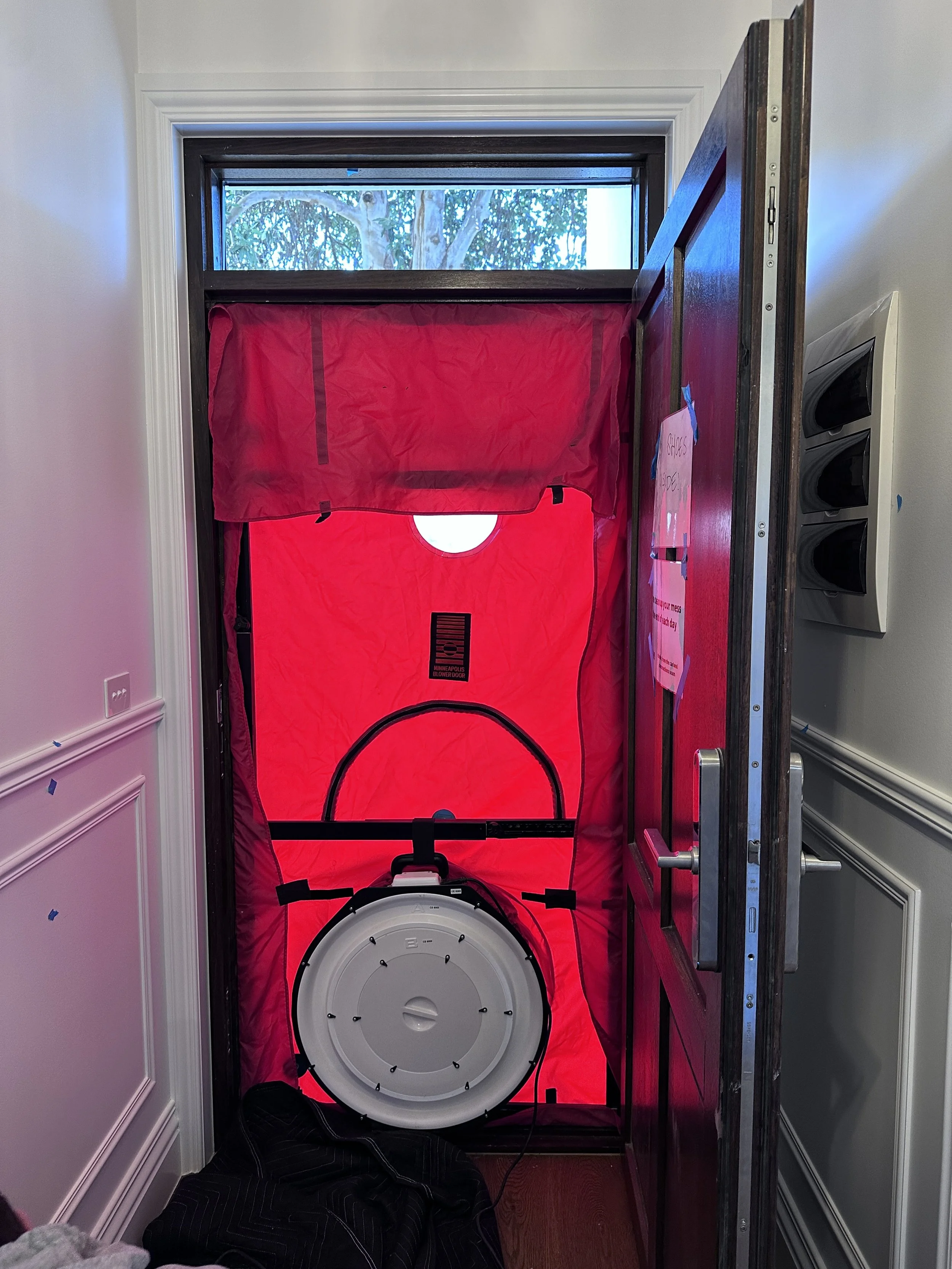
1. Airtight. We seal the building envelope properly and test it with a blower door, so we know exactly how tight it is rather than guessing. No drafts, no uncontrolled air leakage, no energy bleeding out through gaps you can't see.
2. All electric. We've had no gas on our projects since 2019. Every home runs fully electric, which is healthier inside (no combustion), more efficient, and ready for a clean energy grid.
3. Properly insulated, with no gaps. Continuous insulation in the walls, roof and floor, detailed so there are no weak spots for heat to escape or sneak in. The amount is worked out by modelling, not by habit.
4. Thermal bridge free. We design out the hidden paths where heat bypasses the insulation and travels straight through the structure. This is where most builds quietly fail, and where we obsess.
5. Quality external membranes, taped correctly. We use high-grade weather-resistive barriers and tape every join. Water kills buildings, so this is the layer that protects your home from rot, mould and structural damage for the long haul.
6. Serious about water management. Beyond the membrane, we plan how water drains away from and around the building, and we install and tape windows correctly so water has nowhere to get in.
7. High-performance windows. Double or triple glazed with high-performance glass, installed airtight. Windows are the weakest part of any wall, so we don't cut corners here.
8. Mechanical ventilation with heat recovery. Continuous fresh, filtered air to living spaces, stale air pulled out of kitchens and bathrooms, and the heat recovered on the way through. Especially important in the inner west, where the outside air isn't clean.
9. Modelled before we build, tested after. Every project is run through energy modelling during design, then verified on site with testing, so the home performs the way it was designed to. We prove it, we don't assume it.
10. Built to last generations. Durable materials and building science that protect the structure from the inside out, so the home is still performing in 50 years the way it did on day one.
5 ways we're trying to be better
We're not perfect, and we won't pretend to be. Sustainability is a direction, not a finish line, and here's where we're pushing ourselves.
1. Every home is solar and battery ready. We set up all our homes so solar panels and a battery can run the place on clean energy. Even where they're not installed on day one, the home is wired and ready, so going fully self-powered is a simple step, not a renovation.
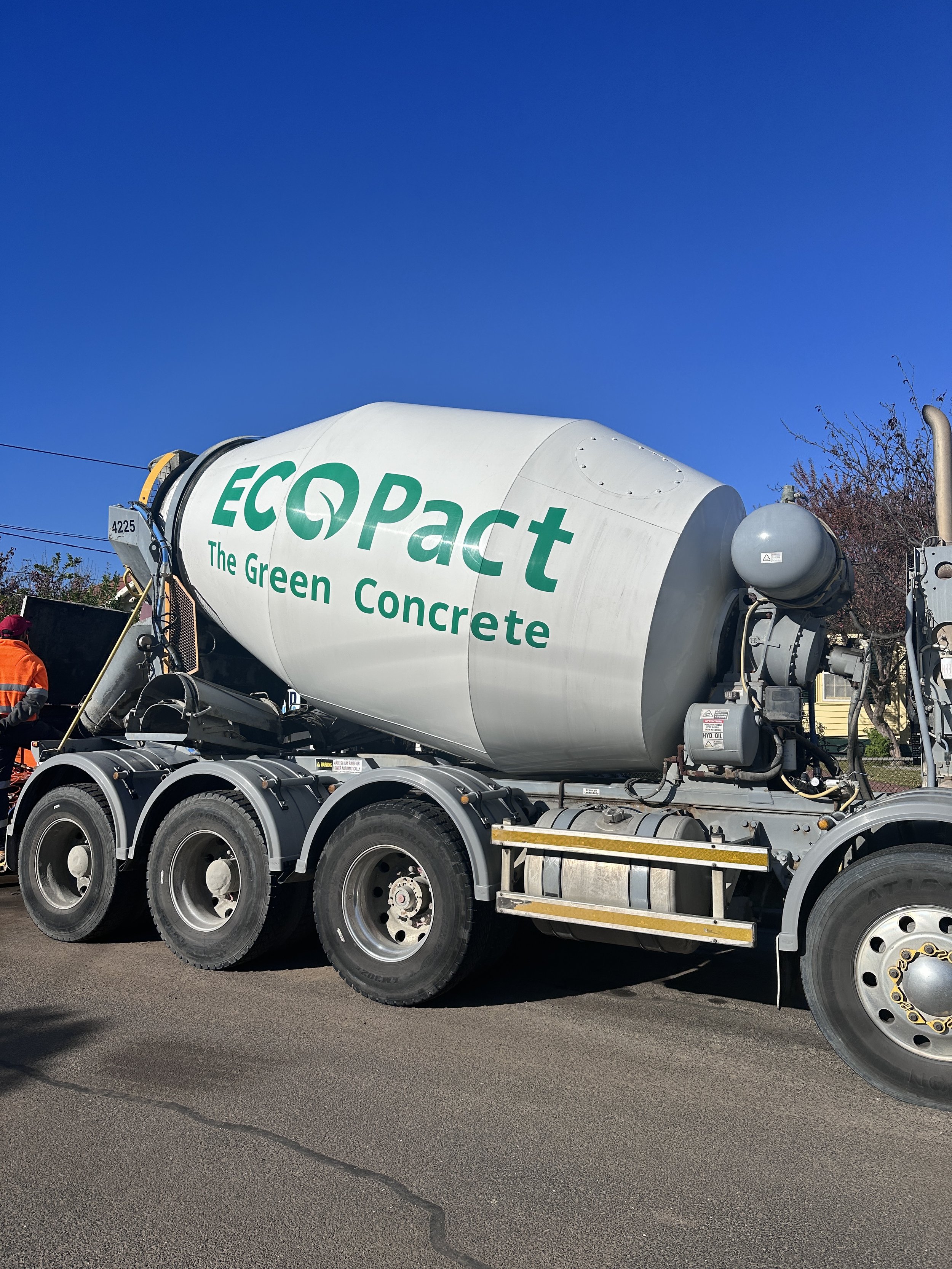
2. We look for responsible materials. We're always weighing up where our materials come from and what they cost the planet, not just what they cost on the invoice. It's not always straightforward, and the options aren't always there yet, but we keep pushing for better choices on every build.
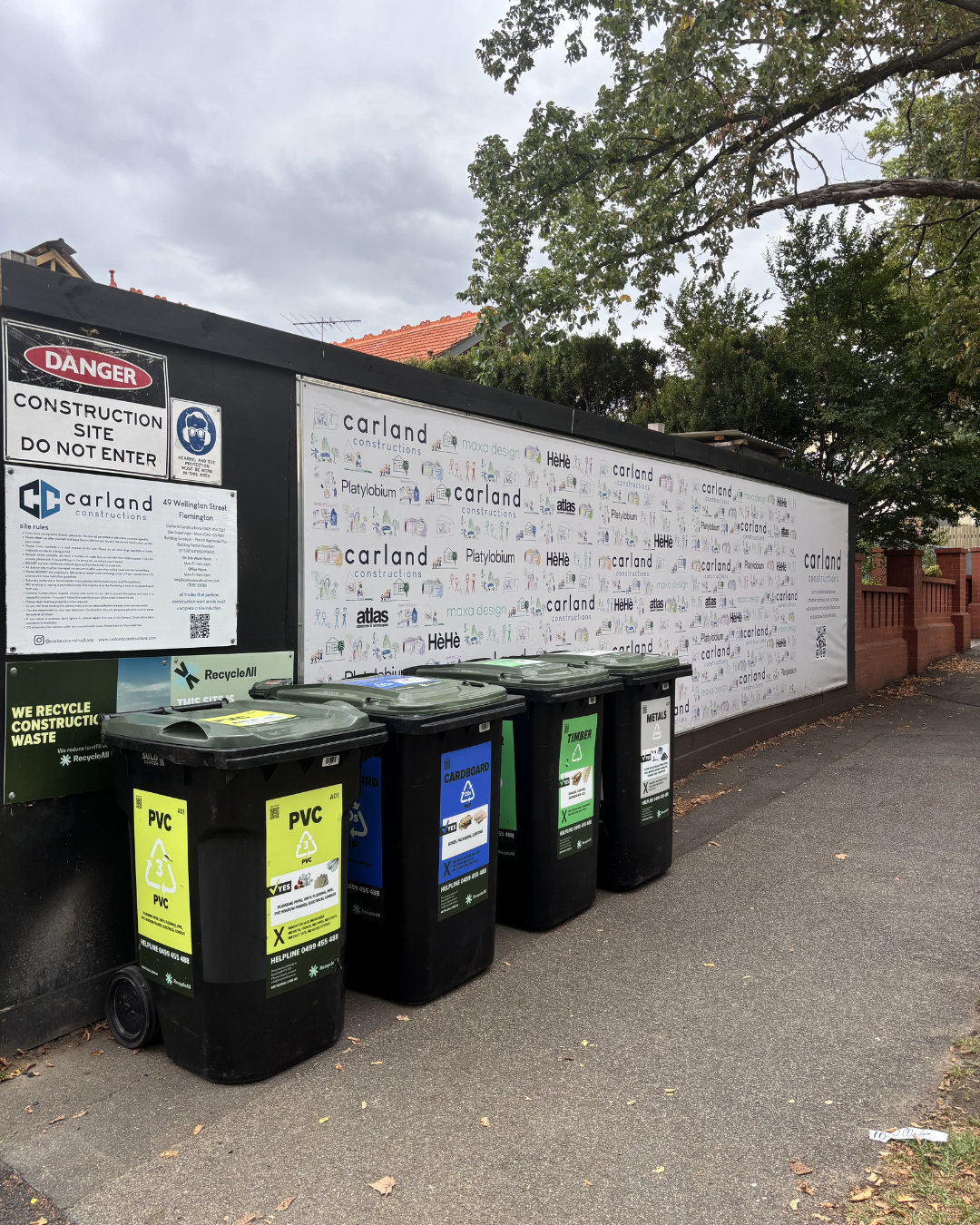
3. We're doing our best to recycle on site. We'll be honest, this is a work in progress. Construction waste is a real problem and our onsite recycling isn't where we want it to be yet. We're improving it rather than hiding behind the easy excuses about space and time.
4. We look after our team. A sustainable business starts with the people in it. We care about a healthy culture and a real work life balance, because burnt-out tradespeople don't build careful homes, and the people who get the hidden details right are the ones who are looked after and stick around. Building well is a long game, and so is building a team that wants to keep doing it.
5. We share what we learn. We teach this stuff to clients, other builders, and anyone who'll listen, because the whole industry only gets better when more people demand better. The more homes built this way, the bigger the difference.