

Healthy home builders in Melbourne
We train our bodies, watch what we eat and track our sleep, then go home to houses that leak, grow mould and fill with fumes. A healthy home isn't a luxury and it isn't hard to build. Every home Carland Constructions builds is designed to look after the people living in it.
A healthy home gives you clean, filtered fresh air around the clock, stays dry so mould can't take hold, holds a steady comfortable temperature, is built and finished with low emission materials, delivers clean water and lets in plenty of daylight. Carland Constructions builds every home around these things using airtight construction, continuous insulation, mechanical ventilation with heat recovery and filtration, careful product selection and testing, which is why building a healthy home in Melbourne is far simpler than most people think.
We look after our bodies, then go home to a house that works against us
Right now everyone is on a health mission. We're at the gym before work, counting steps, tracking our sleep, cutting sugar and spending a small fortune on protein powder and pilates. That's a good thing. But we spend around 90 percent of our lives indoors1, most of it at home, and almost nobody stops to think about the air they breathe in there, the water they drink, the materials they live among or the light they wake up to.
Then COVID hit, and plenty of us went out and bought an air purifier. For the first time a lot of people stopped and asked what was actually in the air at home, and that should have been the start of a movement. A purifier in the corner of the lounge room helps, but it's a bandaid on a house that leaks, grows mould and fills with fumes every time someone cooks on gas. The real fix is the house itself.
Australia's first national report on indoor air landed in 2025, and its finding was blunt. Indoor air quality isn't adequately addressed in our building codes or our health strategies2. We spend nine tenths of our lives inside and we've barely looked.
- What we do for our healthWhat the house is doing
- Gym membershipCold walls growing mould behind the wardrobe
- Clean eatingA gas cooktop filling the kitchen with fumes
- Sleep trackerStale air building up in a closed bedroom
- Air purifierGaps letting in smoke, pollen and traffic fumes
- Organic everythingFresh paint and glue giving off chemicals for months
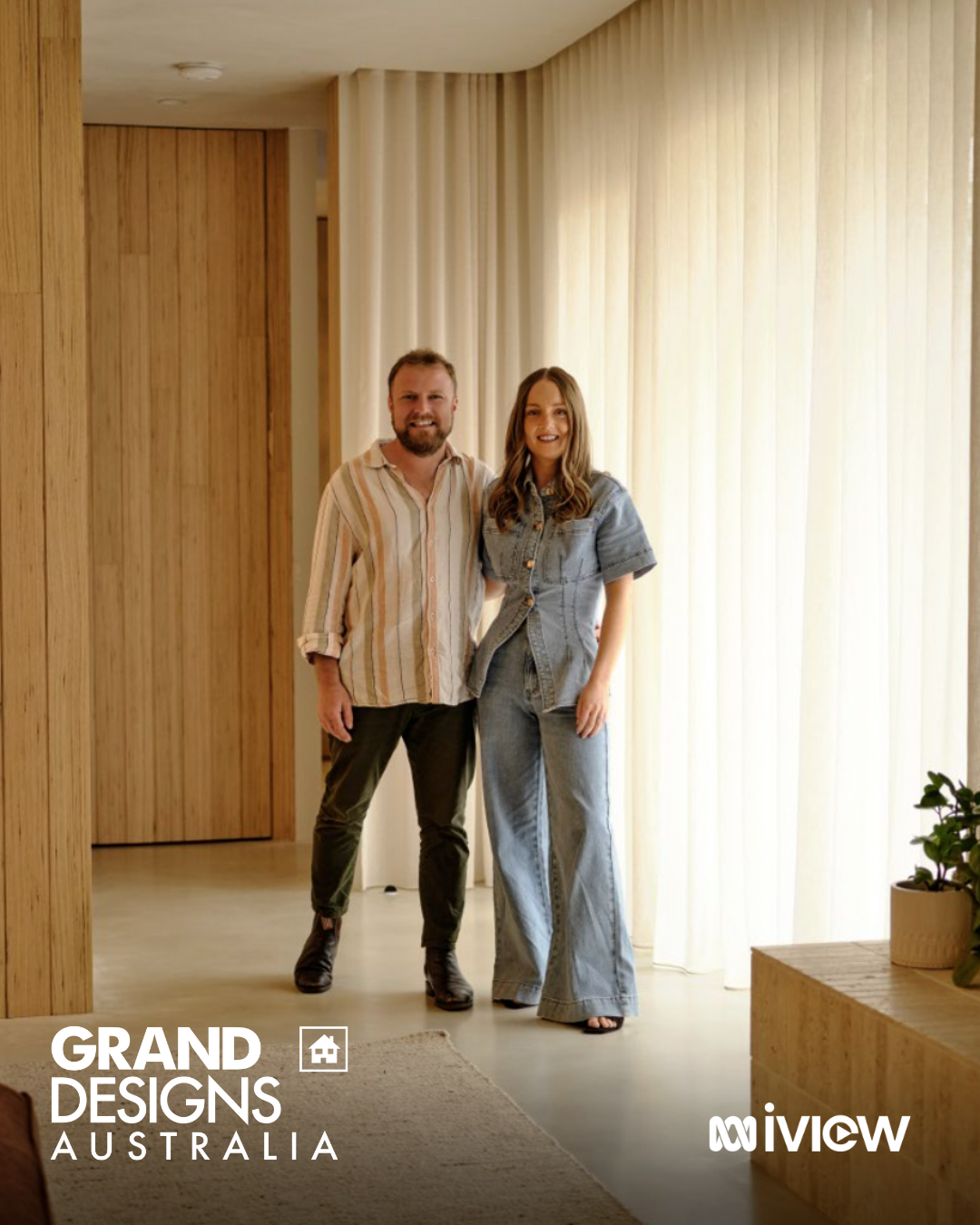
I was that kid
I grew up with asthma. I know what it feels like to be a kid who can't get a full breath, and I know what it does to the parents listening from the next room. Back then nobody told us the house might be part of the problem. Nobody talked about the gas cooktop, the mould behind the wardrobe or the damp in the walls. You took your puffer and you got on with it.
I still live with asthma and allergies to dust, pollen and grass. So when Nicole and I had a baby on the way, living in Yarraville with some of the worst traffic air in Melbourne outside our door, the decision was easy. Plenty of people would have moved. We built Pigeon Passive House instead, a home that gives our family clean, filtered air every single day.
I used to take multiple antihistamines a day. Since we moved in, I've taken two or three in total. When we change the ventilation filters we can physically see the neighbourhood's woodfire smoke caught in them, pollution that would otherwise be in our lungs and our baby's lungs. You can hold it in your hand, and that's the moment people understand what this is for.
No kid should have to grow up fighting the house they live in.Matt Carland, Carland Constructions
Why we can't rely on opening our windows
The old advice is to open the windows and let the house breathe. It assumes the air outside is clean. In a lot of inner Melbourne it isn't, and in winter, when the windows are shut and the fires are lit, it's at its worst. EPA Victoria chemically fingerprinted the fine particle pollution in the inner west across a full year, from May 2021 to May 2022, and these are the Yarraville numbers5.
What's actually in Yarraville's air
Share of fine particle pollution (PM2.5) by source, annual average, Barbara Beyer Reserve monitoring site
Everyone blames the trucks
Across the year diesel is 13 percent and local wood smoke is 12 percent. In winter, wood smoke climbs to 32 percent, and it comes from a small number of homes burning wood for heat. Australia wide, wood heater smoke is estimated to cause 729 premature deaths a year, 163 of them in Victoria6.
Right on the road it's worse again. A community monitor on Francis Street in Yarraville, reviewed by EPA Victoria, recorded the following, while nearby Footscray, as background, ran far cleaner.
In the January 2026 heatwave, bushfire smoke pushed fine particles outside Pigeon Passive House above 90 µg/m³. Inside, our sensors showed the air barely moved16. The only spikes were us frying dumplings, and the ventilation cleared those quickly.
Health data for the area tells the same story. Compared with the national average, young people here have higher rates of asthma hospital admissions and respiratory hospitalisations7. These are associations, not a proven chain, and this suburb also has the port, the trucks and a long industrial history. But you don't have to prove the mechanism to decide you're not going to gamble your kid's lungs on it.
Smoke, pollen, traffic fumes and road dust come straight in with the breeze, unfiltered.
Air through gaps comes from places you'd never choose, like the wall cavity and the subfloor. CSIRO testing found even new Australian homes still leak plenty of it15.
On a still day a leaky house gets almost no fresh air. On a windy day it gets far too much and costs a fortune to heat.
In a Melbourne winter the windows stay shut, so stale air, moisture and cooking fumes build up exactly when it matters most.
A house doesn't need to breathe. People do. So we build it tight, then ventilate it properly, with filtered fresh air delivered on purpose, every hour of every day.
Eight things that make a home healthy
There are seven parts to comfort: temperature, air quality, light, sound, draughts, odour and vibration. Our industry only measures one of them, temperature, and the rest get ignored. Tap a number on the house, or pick a topic below, to see what goes wrong in a typical home, what we do about it and what you can do in the home you're in now.
Fresh, filtered air
A review of Australian studies found indoor levels of nearly every pollutant measured were several times higher than outside9. Stale air builds up overnight in a closed bedroom, cooking fumes and moisture hang around, and whatever leaks in through the gaps comes in unfiltered.
At Pigeon Passive House, the ventilation filters catch the neighbourhood's woodfire smoke before it reaches our lungs. We can see it on the filters every time we change them.
- Seal the house airtight, so air comes in through filters rather than gaps
- Mechanical ventilation with heat recovery, supplying filtered fresh air to bedrooms and living areas around the clock
- Stale, humid air pulled out of the kitchen, bathrooms and laundry
- The heat in the outgoing air warms the incoming air, so fresh air doesn't cost you comfort
- A whole house HEPA grade purifier where the local air calls for it, like at Pigeon
- Run bathroom and kitchen fans that actually vent outside
- Air the house out on clean air days, not on smoky winter nights
- Keep a purifier in the bedroom and change its filter
- Check the air quality forecast before opening up
Mould and moisture
Dampness affects about a quarter of Australian homes4, and an Australian study reported by Monash University researchers found adults allergic to mould had twice the risk of asthma attacks and wheeze10. Mould starts on cold surfaces where moisture condenses, like single glazed windows, uninsulated corners, thermal bridges and the back of a wardrobe on an outside wall. The mould you can't see, inside the wall, is the one that rots the frame.
Bleach doesn't kill mould. It just turns it blonde while it carries on eating your plaster from the inside out.
- Continuous insulation with no thermal bridges, so inside surfaces stay warm and dry
- High performance windows installed within the insulation layer
- Vapour permeable membranes with every join taped, and a drained, ventilated cavity behind the cladding
- Ventilation that carries moisture out all day, every day
- Water managed first, because water kills buildings
- Wipe window condensation every morning in winter
- Dry clothes outside or in a heat pump dryer
- Pull furniture a little off cold outside walls
- Don't paint over mould. Find the moisture causing it
Paints, glues and harsh chemicals
Volatile organic compounds, or VOCs, are chemicals that evaporate into the air from paints, glues, sealants, cabinetry board, carpets, furniture and cleaning products. That new house smell is mostly VOCs. A review of Australian studies found new homes had the highest VOC levels of any homes studied, and formaldehyde was the compound measured most often9. They can irritate eyes and lungs and keep coming out for months after the painters leave.
At Pigeon we skipped conventional paint for a natural lime wash mixed on site with water, which avoids the chemistry of standard paints for us and for the trades applying it. The undercoat carries a Declare label, the joinery board is E0, the floor finish is water based and rated EMICODE EC1 Plus, and the furniture is recycled oak in natural oil with no forever chemicals (PFAS).
- Low or zero VOC paints, sealers and adhesives as standard
- E0 rated board for joinery and cabinetry
- Declare labelled products wherever we can, because a Declare label lists exactly what's in a product
- Natural finishes like lime wash, oils and solid timber
- Water based sealers and floor finishes
- No treated pine on the outside of our homes, because of what it's treated with and who ends up handling it
- Choose low VOC or zero VOC paint for your next repaint
- Air out new furniture and mattresses before bringing them inside
- Swap harsh cleaners and synthetic fragrances for simple ones
- Ask what's in a product, not just what it's called
Floors and dust mites
The floor you pick changes how much dust, pollen and allergen your house holds onto. Dust mites are one of the most common asthma and allergy triggers, and humidity is the biggest factor in how many live in a house. Australia's peak allergy body, ASCIA, says carpet can hold large amounts of house dust mite that vacuuming can't completely remove, and recommends hard floors where practical, along with a home that's kept dry and airy11. Carpet also traps pollen and pet hair deep in the pile, and an underlay laid over a damp slab is a perfect home for mould.
Damp air feeds dust mites. At Pigeon the ventilation keeps indoor humidity steady while it swings wildly outside, without a dehumidifier.
- Hard, cleanable floors like polished concrete, timber and tiles
- Low emission floor finishes and adhesives
- Ventilation that keeps indoor humidity in check all year
- A warm, dry, insulated floor, so nothing underneath sweats
- Choose hard floors with washable rugs over wall to wall carpet
- Vacuum with a HEPA filter vacuum every week
- Wash bedding hot every week
- Keep indoor humidity down with fans and ventilation, and avoid unflued gas heaters and evaporative coolers, which add moisture
The kitchen and your selections
Every product that goes into a house either helps the air or hurts it, and many of those choices are made on a plan by someone who'll never live there. The biggest one is the cooktop. Researchers estimate 12.3 percent of the childhood asthma burden in Australia is linked to gas stoves4, which is a decision someone made on a plan.
Our homes are fully electric, with induction cooking and no gas connection, so there's nothing burning in the kitchen.
- Induction cooktops and no gas connection
- Rangehoods ducted outside, so cooking particles leave the house. At Pigeon we ran a recirculating rangehood, and it's the one thing we'd change
- Durable, natural materials like solid timber and recycled brick
- Lead free tapware and fittings
- Selections made early, during design, so nothing gets swapped on site for whatever's on the truck
- If you cook on gas, run a rangehood that vents outside every time
- A plug in induction cooktop is a cheap way to cook without gas
- Check product labels and data sheets before you buy
- Get rid of unflued gas heaters
Clean water
Melbourne's drinking water is high quality and disinfected before it reaches you, mostly with chlorine, and fluoride is added in many areas12. What ends up in your glass also depends on the pipes and taps in your house. From 1 May 2026, copper alloy plumbing products installed for drinking water in Victoria must contain no more than 0.25 percent lead and carry the lead free WaterMark13.
At Pigeon the tapware is lead free and made in Kerang, Victoria, a 5,000 litre underground rainwater tank is plumbed to the fittings, and we added whole of house water filtration, less for water quality, which is already good here, than to protect the plumbing fittings and fixtures for the long haul.
- Lead free tapware and fittings wherever drinking water runs
- Whole of house filtration, or a filter at the kitchen tap, planned in early so it's neat and easy to service
- Rainwater tanks where the site and the client want them
- Plumbing planned so hot water arrives quickly and doesn't sit in long pipe runs
- Run the cold tap for a few seconds first thing in the morning
- Fit a quality filter at the kitchen tap if you don't like the taste of chlorine
- Look for the lead free WaterMark when you replace a tap
- Change filter cartridges when they're due
Light
Daylight sets your body clock. Monash University's study of more than 86,000 people found bright light during the day was linked to a 20 percent lower risk of depression, while bright light at night was linked to a 30 percent higher risk14. In the researchers' words, it's about bright days and dark nights. Before Pigeon, we lived in a dark south facing house and hated it, which is why north light was non negotiable in our own brief.
At Pigeon the north glass does most of the lighting by day, and at night it's warm 3000K lighting throughout, mostly wall lights rather than downlights, to keep blue light out of the living and sleeping areas.
- Passive solar design, with living areas and most of the glass facing north
- High performance windows, so big glass doesn't mean cold rooms or condensation
- External shading sized to let winter sun in and keep summer sun out
- Warm 3000K lighting in living and sleeping areas, with wall lights over glary downlights
- Open the blinds and get morning light as soon as you're up
- Use warm, dim lighting in the evening
- Keep bedrooms properly dark at night
- Spend time near a window during the day
Comfort and temperature
Cold homes are hard on the lungs, the heart and sleep, and a house that swings between hot and cold makes everyone in it miserable. A home that holds a steady temperature without a big heater roaring is healthier and quieter, and it costs very little to run.
In the coldest month of 2026, outside swung 16.7 degrees while inside Pigeon it moved just 2.1 degrees, and no room dropped below 18.4°C at any hour.
- Continuous insulation and an airtight envelope, tested with a blower door
- No draughts and no cold rooms
- PHPP modelling to design out overheating as well as cold
- Small, quiet heat pump systems sized for a house that barely needs them
- Better glazing for quiet too. At Pigeon, triple glazing shuts out the truck noise from Francis Street
- Seal obvious draughts around doors and windows
- Use heavy curtains with pelmets in winter
- Shade west facing windows from the outside in summer
- Heat the room you're in, not the whole house
What we measured in our own home
Anyone can say a house is healthy. We put sensors in ours and logged every room through the coldest month of 2026, from 1 August to 2 September.
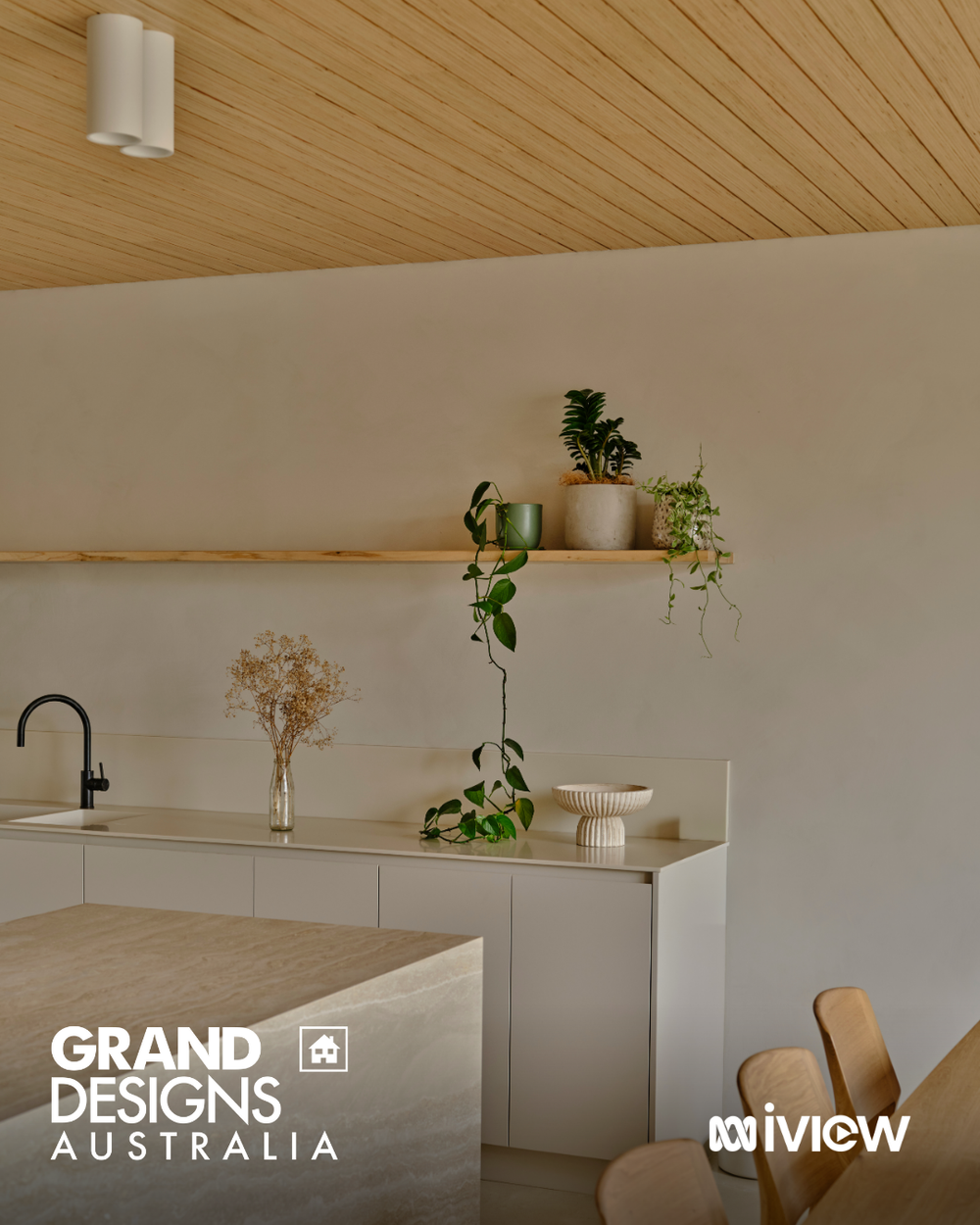
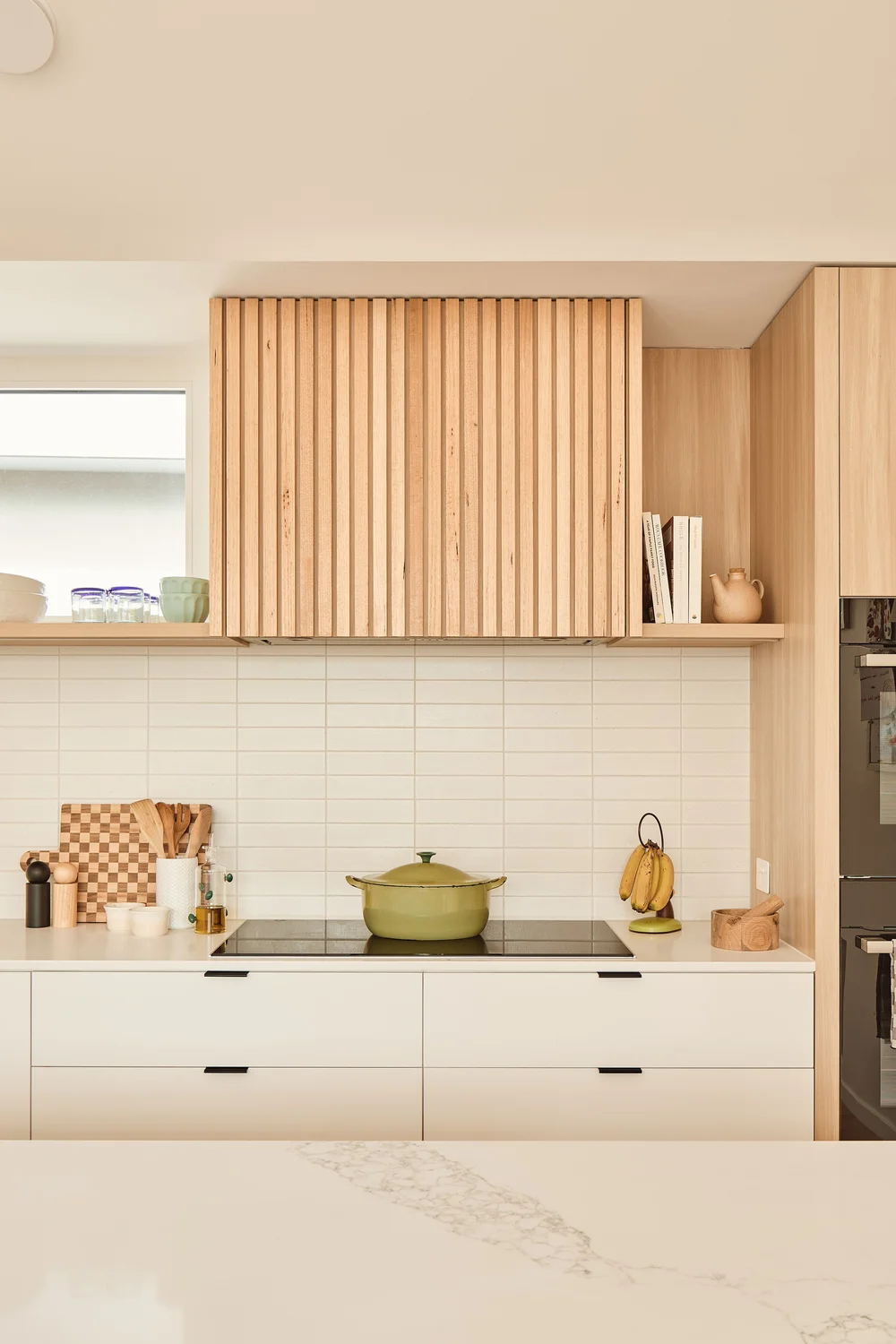
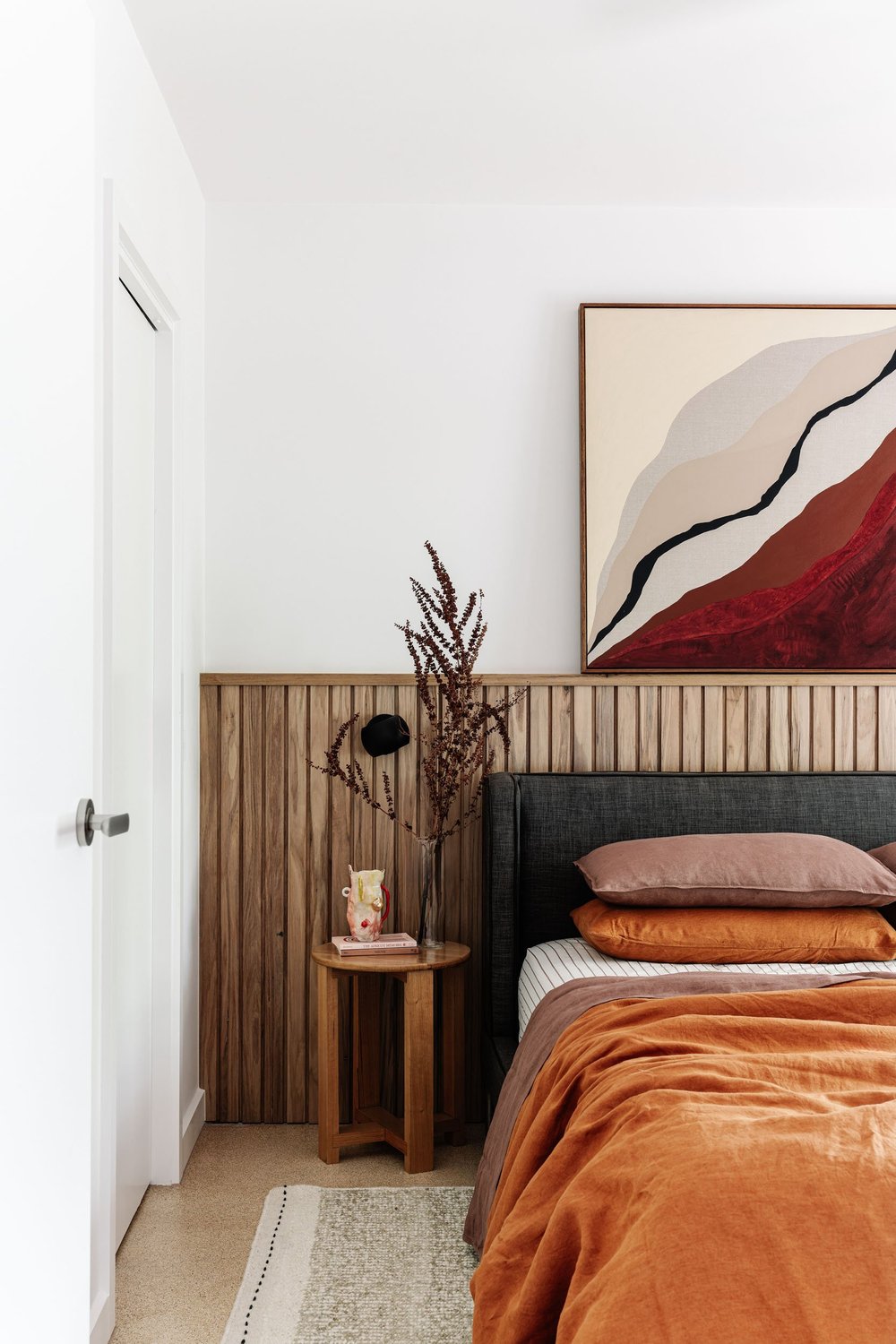
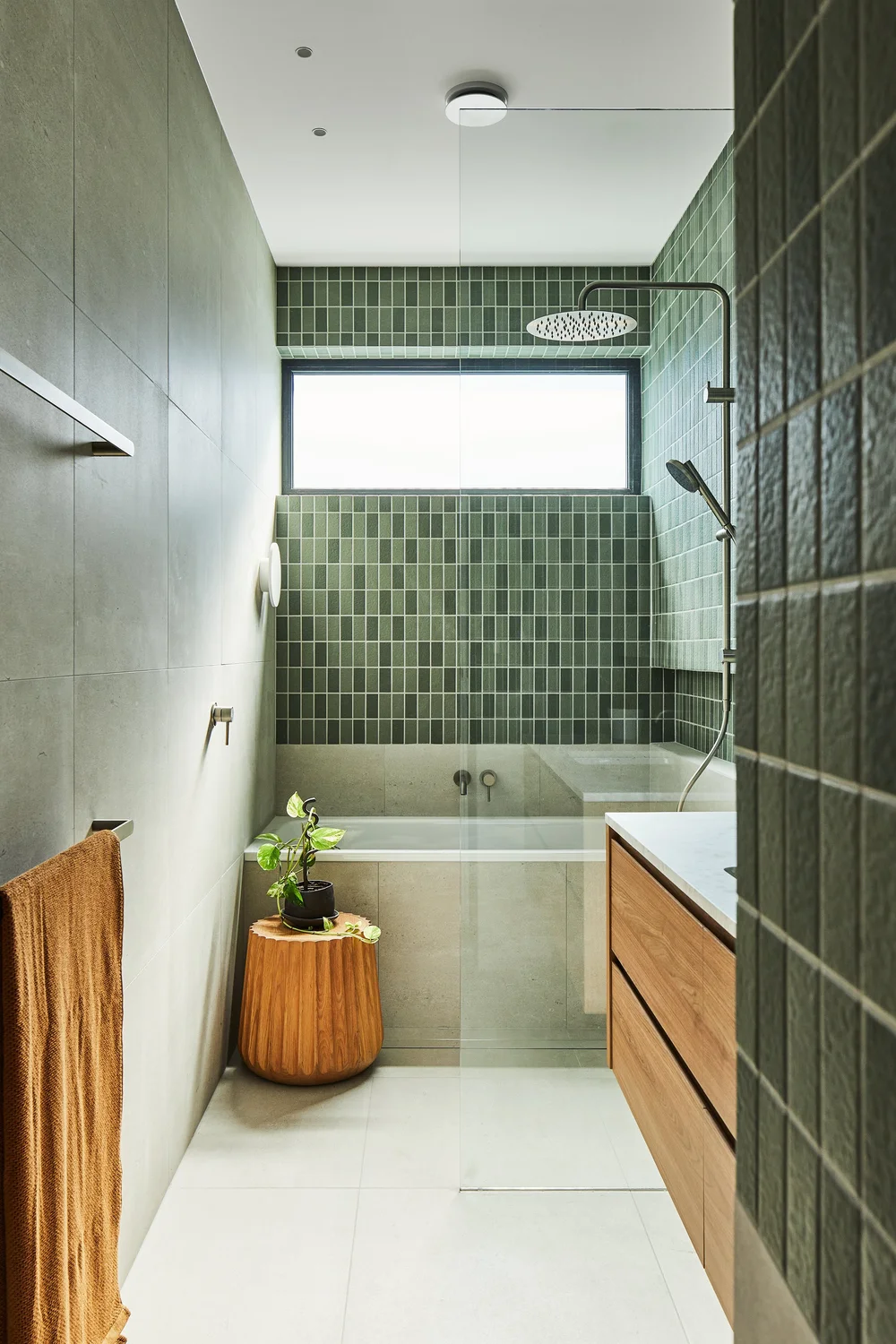
A typical new home compared with a Carland Constructions healthy home
| Typical new home | Carland Constructions healthy home | |
|---|---|---|
| Fresh air | Gaps, open windows and exhaust fans | Filtered fresh air around the clock through heat recovery ventilation |
| Outdoor pollution | Comes in through every gap, unfiltered | Filtered out before the air reaches you |
| Mould and condensation | Common on windows and cold corners | Designed out with warm surfaces and controlled humidity |
| Cooking | Often gas | Induction, fully electric |
| Paints and finishes | Whatever's cheapest on the day | Low or zero VOC, Declare labelled where possible |
| Floors | Often wall to wall carpet | Hard, cleanable, low emission floors |
| Water | Standard fittings | Lead free tapware, filtration planned in |
| Daylight | Windows wherever the facade wants them | North facing glass, modelled with the design |
| Proof | None required | Blower door tested, ventilation flow rates measured |
Building a healthy home is easier than you think
This is the part that surprises people. A healthy home isn't a list of gadgets or a wellness upgrade you pay extra for. It comes from a handful of decisions made early and built properly, and they're the same decisions that make a home comfortable, durable and cheap to run. Every home Carland Constructions builds is designed around them, from our certified Passive Houses to our high efficiency homes, and our Passive House and high performance homes go furthest, with modelling, testing and heat recovery ventilation as standard.
A dry house is a healthy house. Water first, then air, then vapour, then heat.
Every gap is a hole that lets in pollution and carries moisture into the walls.
Filtered fresh air delivered on purpose, every hour of every day.
Low emission paints, glues, boards and floors, picked during design rather than on site.
A blower door test and measured ventilation prove you got what you paid for.
How healthy is your home right now?
Tick everything that's true for the home you're living in today. There's no wrong answer, and most Melbourne homes score lower than people expect.
Tick the boxes that are true for your home and we'll tell you where it stands.
Healthy home questions, answered
What makes a home healthy?
A healthy home gives you clean, filtered fresh air around the clock, stays dry so mould can't grow, holds a steady comfortable temperature, uses low emission paints, glues, boards and floors, delivers clean water through lead free fittings and lets in plenty of natural daylight. Carland Constructions designs and builds every home around these things.
Can my house make asthma worse?
It can. Researchers estimate that 12.3 percent of the childhood asthma burden in Australia is linked to gas stoves and 7.9 percent to damp housing, and Australian research has found adults allergic to mould have twice the risk of asthma attacks. Building better won't cure asthma, but the part we build into people's homes is the part we can design out. This is general information, not medical advice.
Why can't I just open the windows for fresh air?
Because the air outside isn't always clean. In Yarraville, EPA Victoria found local wood smoke makes up almost a third of fine particle pollution in winter, when the windows are shut anyway. Open windows and gaps let smoke, pollen and traffic fumes straight in, and the amount of fresh air you get depends on the weather. Mechanical ventilation with heat recovery delivers filtered fresh air on purpose, every hour of every day.
What is mechanical ventilation with heat recovery?
It's a quiet system that continuously supplies filtered fresh air to bedrooms and living areas and pulls stale, humid air out of the kitchen, bathrooms and laundry. On the way out, the warmth in the old air is passed to the incoming fresh air, so you get fresh air without losing your heating or cooling.
Is an air purifier enough?
A good purifier helps in one room, but it can't fix a house that leaks unfiltered air through every gap, grows mould on cold walls or fills with fumes from a gas cooktop. In a Carland Constructions home the filtration is built into the ventilation for the whole house, and at Pigeon Passive House we added a whole house HEPA grade purifier on top because of the local air.
How do you stop mould in a new home?
By keeping the inside surfaces warm and the moisture moving. We use continuous insulation with no thermal bridges, high performance windows installed in the insulation layer, taped vapour permeable membranes with a drained cavity behind the cladding, and ventilation that removes moisture all day. A dry house doesn't grow mould.
What are VOCs and how do you avoid them?
VOCs are chemicals that evaporate into the air from paints, glues, sealants, cabinetry board, carpets and furniture, and they're why new homes smell new. Australian research found new homes have the highest VOC levels of any homes studied. We use low or zero VOC paints and adhesives, E0 rated joinery board, Declare labelled products where we can and natural finishes like lime wash and solid timber.
Are hard floors better than carpet for allergies?
For most people with dust mite allergies, yes. ASCIA, Australia's peak allergy body, says carpet can hold large amounts of house dust mite that vacuuming can't completely remove, and recommends hard floors where practical. Keeping the home dry and airy matters too, because damp air is what dust mites need.
Do I need a water filter in Melbourne?
Melbourne's tap water is high quality and safe to drink. A filter at the kitchen tap is mainly about taste, for people who don't like the chlorine used to disinfect it, and peace of mind about older pipes and fittings. From 1 May 2026, new copper alloy drinking water fittings in Victoria must be lead free, and we use lead free tapware in our homes. At Pigeon Passive House we added whole of house filtration mainly to protect the plumbing fittings over the long term.
Does a healthy home cost more to build?
Much of it comes down to choices rather than cost, like induction instead of gas, low VOC paint instead of standard paint and hard floors instead of carpet. The ventilation and airtightness add some cost, and they're the same things that make a Passive House comfortable and cheap to run. Our cost page explains where the money goes.
Can you make an existing home healthier?
Yes. An EnerPHit retrofit brings an existing home up to the Passive House standard for existing buildings, with airtightness, insulation, better windows and heat recovery ventilation. Retrofit Rifle in Williamstown took a 1993 brick veneer home to a certified EnerPHit Plus without removing a single brick.
Are all Carland Constructions homes healthy homes?
Yes. Every home we build is designed around clean air, dry construction, low emission materials, good daylight and comfort. Our certified Passive House and high performance homes go furthest, with PHPP modelling, blower door testing and heat recovery ventilation as standard.
The research behind this page
- Australian Academy of Science, Indoor air: the science of indoor air and pathways to improve indoor air quality in Australia, 2025.
- QUT, State of Indoor Air in Australia 2025, Australia's first national report on indoor air quality, October 2025.
- Australian Bureau of Statistics, Asthma, 2022.
- Knibbs, Woldeyohannes, Marks and Cowie, Damp housing, gas stoves, and the burden of childhood asthma in Australia, Medical Journal of Australia, 2018.
- EPA Victoria, Air pollution sources in inner west Melbourne, Publication 2060. Yarraville figures from Site 1, Barbara Beyer Reserve. Francis Street figures from a community sensor reviewed by EPA Victoria.
- Asthma Australia and the Centre for Safe Air, Health toll from wood heater smoke.
- PHIDU, Torrens University Australia, Social Health Atlas of Australia.
- National Asthma Council Australia, Asthma mortality statistics 2024.
- Goodman, Steinemann, Wheeler, Paevere, Cheng and Brown, Volatile organic compounds within indoor environments in Australia, Building and Environment, 2017.
- Jeavons and Abramson, Monash University, More floods means more mould, and more respiratory problems?
- Australasian Society of Clinical Immunology and Allergy (ASCIA), Allergen minimisation.
- Melbourne Water, How we treat Melbourne's drinking water.
- Building and Plumbing Commission Victoria, New lead free plumbing product requirements.
- Monash University, Largest ever study on light exposure proves its impact on mental health, Nature Mental Health, 2023.
- CSIRO, Comfort and energy efficiency on the rise in new Australian homes, 2024.
- Carland Constructions, Pigeon Passive House sensor data, January and August 2026.
Build a home that looks after your family
Whether you're starting with a block of land or a home you love but can't breathe easy in, we'd love to talk about how to make it healthy from the first sketch.
The information on this page is general in nature and isn't medical advice. If you have asthma, allergies or another health condition, talk to your doctor about what's right for you.